Non-Slip Stair Treads & Safety Solutions for Transit
Protecting Passengers in Train Stations, Bus Terminals, Ferry Docks & Airports
Modern transit systems demand the highest level of safety, durability, and compliance. In environments such as train stations, subway systems, airports, bus terminals, and ferry docks, stairways are critical points of movement—and one of the most common locations for slip-and-fall incidents.
Implementing non-slip stair treads, anti-slip stair strips, and photoluminescent egress systems is essential to:
- Reduce slip-and-fall accidents
- Improve passenger safety and accessibility
- Meet building code and safety compliance standards
- Enhance emergency evacuation readiness
For transit authorities, engineers, and facility managers, investing in commercial-grade stair safety solutions is not just a safety measure—it is a long-term infrastructure strategy.
Why Non-Slip Stair Treads and Emergency Egress Systems Are Essential for Transit Safety
Transit infrastructure is one of the most demanding environments for safety systems. Unlike controlled indoor commercial buildings, transit hubs operate under constant pressure from high passenger volumes, environmental exposure, and unpredictable movement patterns.
From crowded subway stations during rush hour to busy airport terminals handling thousands of passengers per hour, stairways become high-risk zones.
Without proper anti-slip stair treads, non-slip stair strips, and emergency egress lighting systems, these areas can quickly become hazardous—especially during wet conditions or emergencies.
Well-designed safety systems ensure:
- Reliable traction on steps under all conditions
- Clear step visibility in both normal and low-light environments
- Safe and efficient evacuation during emergencies
High Passenger Volume and Continuous Foot Traffic Risks
Train stations, airports, and bus terminals are engineered for efficient movement—but during peak hours, overcrowding significantly increases the risk of accidents.
Passengers often:
- Rush to catch trains, buses, or flights
- Carry heavy luggage or equipment
- Navigate unfamiliar layouts
- Move in multiple directions simultaneously
This creates uneven pressure on stair surfaces, reduces reaction time, and increases the likelihood of slips and falls.
High-traffic stairways must therefore be equipped with heavy-duty anti-slip stair treads capable of maintaining traction under constant use.
Uneven Movement Patterns and Behavioral Hazards
Modern transit users often engage in multitasking behaviors, such as:
- Checking mobile devices
- Managing luggage or children
- Navigating unfamiliar spaces
These distractions result in inconsistent walking patterns, increasing the risk of missteps and slips—especially on stairs.
To counter this, transit infrastructure must incorporate:
- High-grip anti-slip stair treads
- High-visibility stair edge markings
- Consistent safety design across all stairways
These features help compensate for human behavior and improve overall safety.
Environmental Exposure: Rain, Snow, Oil, and Debris
Transit environments are constantly exposed to environmental factors that reduce traction.
Common hazards include:
- Water tracked indoors from rain or snow
- Ice accumulation in colder climates
- Oil and fuel residues in bus terminals
- Salt corrosion in coastal and marine environments
These conditions make traditional stair surfaces, such as concrete, tile, or metal, extremely slippery.
Installing non-slip stair treads and abrasive stair nosings ensures a consistent grip, even in the most challenging conditions.
What are Anti-Slip Stair Treads, and how can they improve Transit system safety?
Anti-slip stair treads are durable safety coverings installed on stairs to increase traction, reduce slip-and-fall risks, and improve safety in high-traffic environments such as train stations, airports, and public infrastructure.
They are typically manufactured from composite materials, fiberglass-reinforced polymer (FRP), or aluminum bases with abrasive surfaces, designed to provide reliable grip in wet, icy, or high-use conditions.
These systems are widely used in commercial, industrial, and transit environments where safety and durability are critical.
How Anti-Slip Stair Treads Work in Transit Environments
Anti-slip stair treads function by increasing friction between the foot and the stair surface, significantly reducing the risk of slipping.
They are engineered to perform in high-traffic, high-risk environments, ensuring consistent safety performance over time.
Materials Used in High-Performance Stair Treads
Fiberglass Reinforced Polymer (FRP)
FRP is one of the most widely used materials for transit stair safety systems due to its strength and durability.
Key benefits include:
- Corrosion resistance in harsh environments
- High load-bearing capacity
- Performance in extreme weather conditions
- Long lifespan with minimal maintenance
Aluminum with Silicon Carbide Grit
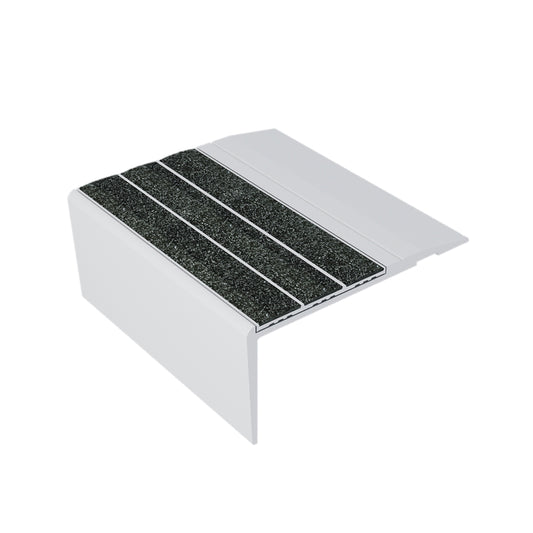
Aluminum stair nosings combined with silicon carbide grit provide:
- Aggressive slip resistance
- Enhanced durability under heavy use
- Improved step edge visibility
These are commonly used in indoor and outdoor transit environments.
Benefits of Anti-Slip Stair Treads
Maximum Slip Resistance in All Conditions
Anti-slip stair treads maintain traction in:
- Wet conditions
- Snow and ice
- High-traffic environments
This significantly reduces accident risk.
Long-Term Durability
Designed to handle thousands of daily users, these systems provide consistent performance over many years.
Retrofit Installation
Anti-slip stair treads can be installed directly over existing stairs, eliminating the need for costly demolition or reconstruction.
Non-Slip Stair Strips: Targeted Traction Where It Matters Most
Non-slip stair strips provide focused traction at the leading edge of steps, where most slip incidents occur.
They are ideal for environments where full stair coverage is not required but enhanced safety is still essential.
Where Stair Strips Are Most Effective
Airport Terminals

Non-slip strips offer a subtle yet effective safety solution that integrates seamlessly with modern airport design.
Metro or Subway Platforms
High-visibility edge markings improve passenger awareness and reduce the risk of falls at stair transitions.
Indoor Transit Staircases

In interior environments, non-slip strips provide safety without compromising architectural aesthetics.
What are the best stair safety solutions for transit infrastructure?
The best stair safety solutions for transit infrastructure include anti-slip stair treads for maximum traction, non-slip stair strips for step-edge safety, and photoluminescent egress systems to ensure visibility during emergencies in high-traffic environments such as train stations and airports.
Applications of Non-Slip Stair Safety in Transit Infrastructure
Transit environments such as train stations, subway systems, airports, and bus terminals require highly specialized safety solutions due to constant passenger movement, environmental exposure, and emergency preparedness needs.
Among these, train and subway stations represent some of the most critical applications for anti-slip stair treads, non-slip stair strips, and photoluminescent egress systems, where safety performance must remain consistent under extreme conditions.
Train & Subway Stations – High-Density Safety and Emergency Preparedness
Train and subway stations operate under intense pressure, with thousands of passengers moving through stairways during peak hours. These environments demand high-performance non-slip stair safety systems that can prevent accidents while supporting efficient evacuation.
Key Safety Challenges:
- High crowd density and peak-hour congestion
- Wet and slippery conditions from rain, snow, and tracked-in moisture
- Fast-moving passengers rushing to catch trains
- Complex layouts with multiple levels and exits
- Emergency evacuation requirements in enclosed underground spaces
Without proper anti-slip stair solutions and egress lighting systems, these conditions significantly increase the risk of slip-and-fall incidents.
Recommended Safety Solutions:
- Anti-slip stair treads for full-surface traction on high-traffic stairways
- Photoluminescent stair edge markings for visibility during power failures
- High-contrast stair nosings for improved step recognition
- Continuous egress path markings guiding passengers to exits
These systems work together to create a safe, visible, and code-compliant stair environment, ensuring passengers can move confidently in both normal and emergency conditions.
Photoluminescent Stair Markings and Emergency Egress Lighting
Emergency visibility is a critical component of transit infrastructure safety design. During power outages, fires, or smoke conditions, traditional lighting systems may fail—making it difficult for passengers to safely navigate exits.
Photoluminescent safety systems provide a reliable, energy-free solution for guiding occupants to safety.
What Is Photoluminescent Technology?
Photoluminescent safety systems absorb ambient light and glow in the dark, providing visibility during power outages or emergencies without requiring electricity or batteries. These systems are widely used in stairways, corridors, and exit pathways to support safe evacuation in transit environments.
Why Floor-Level Lighting Saves Lives
In emergency situations, visibility is often compromised by smoke, darkness, or power outages.
Key realities of emergency conditions include:
- Smoke rises and accumulates near ceilings
- Overhead lighting becomes obscured or ineffective
- Panic and confusion increase in low-visibility environments
Floor-level photoluminescent systems remain visible, helping guide passengers safely toward exits.
These systems are particularly important in:
- Underground metro / subway stations
- Enclosed transit corridors
- Multi-level transportation hubs
Visibility in Smoke Conditions
Photoluminescent stair markings and path indicators remain visible below the smoke layer, providing clear directional guidance when overhead signage is no longer visible.
This significantly improves evacuation efficiency and reduces the risk of injuries.
Power-Outage Reliability
Unlike traditional emergency lighting systems, photoluminescent systems:
- Require no electricity
- Do not rely on batteries
- Operate automatically after exposure to ambient light
This makes them one of the most reliable safety solutions for critical infrastructure environments.
How Long Do Photoluminescent Systems Glow?
High-quality photoluminescent systems can glow for 6–12 hours after charging under normal lighting conditions, providing extended visibility during emergencies and ensuring safe evacuation over long durations.
Code Compliance for Transit Infrastructure Safety Systems
Transit infrastructure projects must comply with strict building codes and safety regulations to ensure passenger protection, legal compliance, and operational approval.
Non-compliant systems can result in:
- Project delays
- Regulatory penalties
- Increased liability
- Safety risks
Using certified anti-slip stair treads and photoluminescent egress systems ensures compliance with recognized standards.
U.S. Standards for Stair Safety and Egress Systems
Transit projects in the United States must align with:
- International Building Code (IBC) – governs building safety and egress requirements
- NFPA 101 Life Safety Code – outlines emergency evacuation standards
- UL1994 – standard for photoluminescent safety markings
These standards ensure that stairways and exit pathways remain visible, accessible, and safe during emergencies.
Canadian Standards for Transit Safety Systems
In Canada, transit infrastructure must comply with:
- Ontario Building Code (OBC)
- National Building Code of Canada (NBC)
- CAN/ULC-S572 – photoluminescent exit and path marking systems
These regulations are designed to ensure that buildings provide:
- Adequate slip resistance on stairways
- Clear emergency exit guidance
- Safe evacuation pathways
These standards ensure that:
- Stairways provide adequate slip resistance
- Emergency egress paths remain visible
- Occupants can safely evacuate during emergencies
Using compliant products helps:
- Secure project approvals
- Reduce legal and regulatory risk
- Meet insurance requirements
- Ensure passenger safety
For architects and engineers, specifying ComposiGrip™ and Ecoglo® products simplifies compliance while delivering high-performance results.
Why Code Compliance Matters for Transit Infrastructure
Compliance with these standards ensures:
- Legal protection against liability claims
- Passenger safety during daily operations and emergencies
- Faster project approvals and inspections
- Alignment with insurance and regulatory requirements
For architects, engineers, and facility managers, specifying compliant systems like ComposiGrip™ anti-slip stair treads and Ecoglo® photoluminescent products simplifies the approval process while ensuring long-term safety performance.
What safety systems are required for transit stairways?
Transit stairways require anti-slip stair treads for traction, high-visibility stair edge markings, and photoluminescent egress systems to ensure safe navigation and evacuation during both normal operations and emergency conditions.
Train & Subway Stations – High Traffic and Emergency-Ready Safety Systems
Train and subway stations are among the busiest public environments, often handling thousands of passengers per hour during peak times.
Key Safety Challenges:
- High crowd density during rush hours
- Wet floors from rain, snow, and tracked-in moisture
- Rapid movement and rushing passengers
- Transitions between platforms, escalators, and stairways
- Critical emergency evacuation requirements
These conditions increase the likelihood of slip-and-fall accidents, especially on stairways where visibility and traction are essential.
Recommended Non-Slip Safety Solutions:
- Anti-slip stair treads for maximum traction on all stair surfaces
- Photoluminescent step edge markings for visibility during power outages
- High-contrast stair nosings for improved step recognition
- Continuous egress path markings for emergency evacuation
These solutions ensure that passengers can move safely under both normal operating conditions and emergency scenarios.
Bus Terminals – Managing Oil Exposure and Outdoor Conditions
Bus terminals present a unique combination of mechanical and environmental hazards.
Key Safety Challenges:
- Oil and fuel contamination from buses
- Dirt, debris, and water accumulation
- Outdoor exposure to rain, snow, and temperature changes
- High passenger turnover
These factors can quickly make stairways and walkways slippery and unsafe.
Recommended Non-Slip Safety Solutions:
- Composite anti-slip stair treads designed to resist oil, moisture, and heavy wear
- Durable non-slip stair strips for indoor staircases and passenger areas
- Abrasive surfaces that maintain grip under contaminated conditions
- Weather-resistant materials for long-term outdoor use
By using heavy-duty materials, bus terminals can maintain consistent traction and safety performance even in challenging conditions.
Ferry Docks – Marine-Grade Safety for Wet and Corrosive Environments
Ferry docks and marine terminals are among the most hazardous environments for slip resistance due to constant exposure to water and salt.
Key Safety Challenges:
- Continuous moisture from waves, rain, and humidity
- Saltwater corrosion affecting materials
- Algae and biofilm buildup on surfaces
- Slippery metal and concrete stairways
Without proper safety systems, these conditions can lead to frequent accidents.
Recommended Non-Slip Safety Solutions:
- Corrosion-resistant anti-slip stair treads (FRP or marine-grade materials)
- High-grip abrasive surfaces for maximum traction in wet conditions
- Photoluminescent markings for low-light and foggy conditions
- Slip-resistant stair nosings designed for marine environments
These solutions ensure long-term durability and reliable performance in extreme coastal and waterfront conditions.
Airports – High-Volume Passenger Movement and Emergency Preparedness
Airports are complex, high-capacity environments that require both aesthetic design and advanced safety systems.
Key Safety Challenges:
- Heavy luggage movement on stairs
- Continuous passenger flow
- International travelers unfamiliar with layouts
- Large-scale evacuation planning requirements
- Long operating hours with varying lighting conditions
These factors demand safety systems that are both highly effective and visually integrated into the environment.
Recommended Non-Slip Safety Solutions:
- Anti-slip stair strips for discreet yet effective traction
- Photoluminescent stair markings and egress systems for emergency visibility
- High-contrast step edges to improve navigation
- Low-profile safety systems that maintain architectural aesthetics
These systems ensure safe passenger movement while supporting large-scale emergency evacuation readiness.
What are the best non-slip stair safety solutions for transit infrastructure?
The best non-slip stair safety solutions for transit infrastructure include anti-slip stair treads for maximum traction, non-slip stair strips for step edge safety, and photoluminescent egress systems to ensure visibility during emergencies in environments such as train stations, airports, bus terminals, and ferry docks.
Designing Safe Egress Pathways in Transit Infrastructure
Designing safe egress pathways is a critical component of modern transit infrastructure safety planning. In high-traffic environments such as train stations, subway systems, airports, bus terminals, and ferry docks, evacuation routes must remain clear, visible, and easy to follow under all conditions—including power outages, smoke, and crowd congestion.
Effective egress design integrates:
- Non-slip stair treads and anti-slip stair nosings
- Photoluminescent path markings and emergency lighting systems
- High-visibility step edge contrast
- Consistent wayfinding across large facilities
These elements work together to ensure that passengers can navigate safely and evacuate efficiently, even in high-stress emergency situations.
Continuity of Path Markings for Safe and Efficient Evacuation
Continuity is one of the most important principles in emergency egress pathway design.
Path markings must provide clear, uninterrupted guidance from any point within a facility to the nearest exit. Breaks or inconsistencies in markings can lead to confusion, hesitation, and delays during evacuation.
In transit environments, this means:
- Continuous photoluminescent strips along stair edges and landings
- Clearly marked pathways from platforms to exits
- Consistent marking along corridors, ramps, and stairwells
- Integration of markings with handrails and wall guidance systems
When pathways are continuous, passengers can follow a visually intuitive route, even in low visibility conditions such as smoke or darkness.
Visual Contrast for Enhanced Step Recognition and Safety
Visual contrast plays a vital role in preventing slips, trips, and falls—especially in crowded or fast-moving transit environments.
High-contrast stair edges help passengers quickly identify changes in elevation, reducing the risk of missteps.
Effective contrast strategies include:
- Bright or luminous stair nosings and edge strips
- Color differentiation between tread and riser
- Reflective or glow-in-the-dark markings
- Use of photoluminescent materials for low-light visibility
This is particularly important in:
- Dimly lit subway systems
- Night-time transit operations
- Emergency evacuation scenarios
Improved step visibility is essential for:
- Elderly passengers
- Individuals with visual impairments
- Travelers carrying luggage
Consistency in Markings to Reduce Confusion and Improve Wayfinding
Consistency in safety markings ensures that passengers can recognize and follow egress routes instinctively, without needing to stop and interpret signage.
In large and complex transit environments, inconsistent markings can lead to:
- Passenger confusion
- Slower evacuation times
- Increased risk of accidents
A consistent system includes:
- Uniform placement of stair edge markings
- Standardized colors and materials
- Repeated visual cues across all levels of the facility
- Alignment with building codes and safety standards
Consistency is especially critical in:
- Multi-level transit hubs
- Airports with large terminals
- Interconnected subway systems
By maintaining uniform safety design, transit authorities can create a predictable and intuitive navigation experience.
What are the key principles of safe egress pathway design?
The key principles of safe egress pathway design include continuity of path markings, high visual contrast for step edges, and consistent safety markings throughout the facility to ensure clear navigation and safe evacuation during emergencies.
Why ComposiGrip™ & Ecoglo® Are Trusted by Industry Professionals for Transit & Infrastructure Safety
When it comes to non-slip stair safety solutions for transit infrastructure, engineers, architects, facility managers, and government agencies require products that deliver proven performance, long-term durability, and full code compliance.
ComposiGrip™ anti-slip stair treads and Ecoglo® photoluminescent safety systems are trusted across North America because they are specifically engineered for high-traffic, high-risk environments such as:
- Train and subway stations
- Airports and terminals
- Bus depots and transit hubs
- Ferry docks and marine infrastructure
These environments demand safety systems that perform consistently under extreme usage, environmental exposure, and emergency conditions.
Proven Performance in High-Traffic Transit Environments
ComposiGrip™ and Ecoglo® products are designed to withstand the most demanding real-world conditions.
Unlike temporary solutions such as anti-slip tape or coatings, these systems are engineered for continuous heavy pedestrian traffic, including:
- Rush hour congestion
- Rolling luggage impact
- Constant wear from thousands of daily users
- Wet, icy, or contaminated surfaces
The use of industrial-grade materials such as:
- Fiberglass reinforced polymer (FRP)
- Aluminum stair nosings with silicon carbide grit
- Photoluminescent safety materials
ensures long-lasting slip resistance and visibility.
These systems are widely used in:
- Public transit stations
- Commercial infrastructure projects
- Government facilities
- High-rise emergency stairwells
Their proven performance in these environments makes them a reliable choice for critical safety applications where failure is not an option.
Long-Term Cost Efficiency and Reduced Maintenance
One of the biggest advantages of ComposiGrip™p and Ecoglo® systems is their long lifecycle and low maintenance requirements.
Traditional safety solutions—such as:
- Adhesive anti-slip tapes
- Painted coatings
- Temporary grip applications
tend to degrade quickly in transit environments due to:
- Foot traffic wear
- Environmental exposure
- Cleaning and maintenance processes
This leads to frequent replacement cycles, increasing both material and labor costs.
In contrast, ComposiGrip™ stair treads and Ecoglo® systems are built for long-term performance, offering:
- 10–20+ year lifespan
- Resistance to UV, moisture, and corrosion
- Minimal maintenance requirements
- Consistent performance over time
This results in:
- Lower total cost of ownership
- Reduced operational disruptions
- Fewer maintenance interventions
For transit authorities managing large infrastructure networks, these savings can be substantial over time.
Why are ComposiGrip™ and Ecoglo® products preferred for transit safety?
ComposiGrip™ and Ecoglo® products are preferred for transit safety because they provide durable anti-slip performance, long-term cost efficiency, and compliance with major building codes, making them ideal for high-traffic environments like train stations, airports, and public infrastructure.
The Business Case for Non-Slip Stair Safety in Transit Infrastructure
Investing in non-slip stair treads, anti-slip stair strips, and photoluminescent egress systems is not just a safety upgrade—it is a strategic business decision for transit authorities, municipalities, and infrastructure operators.
In high-traffic environments such as train stations, subway systems, bus terminals, ferry docks, and airports, safety failures can lead to costly legal claims, operational disruptions, and reputational damage.
Implementing commercial-grade non-slip stair safety solutions helps reduce risk, improve compliance, and deliver long-term cost savings.
Reduced Liability and Legal Risk from Slip-and-Fall Accidents
Slip-and-fall incidents are one of the leading causes of injury in public infrastructure and transportation facilities.
Without proper anti-slip stair treads and high-visibility step edge markings, transit agencies face:
- Personal injury lawsuits
- Insurance claims and increased premiums
- Legal fees and settlements
- Regulatory penalties
In many cases, a single slip-and-fall accident can cost tens of thousands to millions of dollars, especially in high-profile public environments like airports or subway systems.
Installing non-slip stair treads and photoluminescent safety systems demonstrates proactive risk management and due diligence.
Lower Maintenance Costs with Long-Term Durable Materials
Traditional safety solutions such as anti-slip tape or coatings often fail in transit environments due to:
- Heavy foot traffic
- Weather exposure
- Constant wear and tear
These temporary solutions require frequent replacement, increasing maintenance costs over time.
In contrast, high-performance anti-slip stair treads and non-slip strips made from:
- Fiberglass reinforced polymer (FRP)
- Aluminum with abrasive grit
- Composite safety materials
are designed to last 10–20+ years with minimal maintenance.
Benefits include:
- Reduced repair cycles
- Lower labor costs
- Consistent performance over time
- Long-term cost efficiency
Improved Public Safety and Passenger Experience
Safety improvements directly enhance the overall user experience in transit environments.
When passengers feel safe navigating stairs, platforms, and walkways, it leads to:
- Reduced accidents and injuries
- Increased confidence in public infrastructure
- Improved accessibility for all users
- Better operational efficiency
Non-slip stair systems also support accessibility by:
- Improving traction for elderly passengers
- Assisting individuals with mobility challenges
- Enhancing visibility for visually impaired users
Fewer injuries mean fewer disruptions, better service continuity, and stronger public trust.
Future Trends in Transit Safety and Infrastructure Design
As cities grow and transit systems expand, safety technologies are evolving rapidly. Modern infrastructure is moving toward proactive, data-driven, and sustainable safety systems.
The future of transit safety integrates non-slip stair solutions with smart technologies, sustainability initiatives, and advanced materials.
AI Safety Monitoring and Predictive Risk Detection
Artificial intelligence is transforming how transit systems manage safety.
AI-powered systems can:
- Analyze foot traffic patterns
- Detect high-risk zones
- Predict where accidents are likely to occur
- Recommend preventive measures
When combined with anti-slip stair treads and photoluminescent safety systems, AI helps create a proactive safety ecosystem rather than a reactive one.
For example:
- Identifying high-slip-risk stairways
- Monitoring peak congestion times
- Optimizing maintenance schedules
Sustainable Materials and Eco-Friendly Safety Systems
Sustainability is becoming a key priority in infrastructure development.
Modern non-slip stair treads and photoluminescent systems are increasingly designed with:
- Long lifespan (reducing waste)
- Recyclable materials
- Low environmental impact
- Energy-free operation (no electricity required for photoluminescent systems)
Photoluminescent safety systems are particularly sustainable because they:
- Require no power
- Reduce energy consumption
- Operate passively using ambient light
This aligns with green building standards and sustainability goals.
Integrated Smart Infrastructure and Connected Safety Systems
Future transit infrastructure will combine multiple safety systems into one integrated network.
This includes:
- Smart sensors
- Connected lighting systems
- Real-time monitoring dashboards
- Integrated emergency response systems
Non-slip stair treads and photoluminescent systems will remain foundational, but will be enhanced by:
- Smart alerts for hazardous conditions
- Automated maintenance notifications
- Integration with building management systems (BMS)
This creates a fully connected, intelligent safety ecosystem.
Why Investing in Non-Slip Stair Safety Is Essential for Modern Transit Infrastructure
In today’s high-demand transit environments, safety is no longer optional—it is a critical component of infrastructure design, compliance, and public trust.
By investing in:
- Anti-slip stair treads
- Non-slip stair strips
- Photoluminescent egress systems
Transit authorities and infrastructure managers can:
- Reduce liability and legal exposure
- Lower long-term maintenance costs
- Improve passenger safety and accessibility
- Meet and exceed building code requirements
- Future-proof infrastructure with modern safety solutions
ComposiGrip™ solutions are designed to meet these demands, delivering durable, compliant, and high-performance stair safety systems for transit environments across Canada and North America.
About ComposiGrip™
ComposiGrip™ is a leading brand and a provider of anti-slip stair safety solutions, specializing in high-performance products designed for commercial, industrial, and public infrastructure environments.
With extensive experience in:
- Transit safety systems
- Stair tread solutions
- Photoluminescent egress technology
ComposiGrip™ works with:
- Architects
- Contractors
- Facility managers
- Government agencies
to improve safety and compliance across North America.
Contact ComposiGrip™ for Transit Safety Solutions
Transit environments demand the highest level of safety performance.
From train stations to airports, every step must be secure, visible, and compliant.
By implementing:
- Anti-slip stair treads
- Non-slip strips
- Photoluminescent egress systems
You can significantly reduce accidents, improve evacuation safety, and meet building code requirements.
Contact ComposiGrip™ today to learn more about professional stair safety solutions for transit and infrastructure projects.
Visit: https://composigrip.com/pages/contact
Frequently Asked Questions on Non-Slip Stair Treads for Transit
What are non-slip stair treads used for in transit infrastructure?
Non-slip stair treads provide traction and reduce slip risks in high-traffic environments like train stations and airports.
Are anti-slip stair treads required by building codes?
Yes, many building codes require slip-resistant surfaces and emergency egress markings in public infrastructure.
How do photoluminescent systems improve evacuation safety?
They provide visibility in darkness, guiding people safely during power outages or emergencies.
Can non-slip stair treads be used outdoors?
Yes, they are designed to withstand rain, snow, UV exposure, and heavy traffic.
Where should non-slip solutions be installed?
- Stairways
- Platforms
- Emergency exits
- Walkways
- Boarding areas
What is the lifespan of anti-slip stair systems?
High-quality systems can last 10–20+ years with minimal maintenance.
What is the difference between anti-slip stair treads and non-slip stair strips?
Anti-slip stair treads typically cover the full surface of a step, providing maximum traction, while non-slip stair strips are installed at the front edge of steps to enhance grip and visibility with a lower-profile design.
Do non-slip stair treads work in wet or icy conditions?
Yes, high-quality anti-slip stair treads are specifically engineered with abrasive surfaces such as aluminum oxide or silicon carbide to maintain traction in wet, icy, or snowy conditions.
Are non-slip stair solutions suitable for heavy passenger traffic?
Yes, commercial-grade stair treads and strips are designed to withstand thousands of users daily, making them ideal for transit environments like subway stations, airports, and bus terminals.
How do you install anti-slip stair treads in existing transit facilities?
Anti-slip stair treads can be retrofitted onto existing stairs using mechanical fasteners or adhesives, allowing for quick installation without major structural changes or downtime.
Do photoluminescent stair systems require electricity or maintenance?
No, photoluminescent systems absorb ambient light and glow in darkness without electricity, wiring, or batteries, requiring minimal maintenance over their lifespan.
How long do photoluminescent stair markings last?
High-quality photoluminescent products can last 20+ years while maintaining their glow performance when properly installed and maintained.
What are the key safety risks in transit stairways?
The most common risks include wet surfaces, heavy foot traffic, uneven walking patterns, poor visibility, and emergency evacuation conditions.
Are anti-slip stair treads compliant with accessibility standards?
Yes, many anti-slip stair systems are designed to support accessibility requirements by improving traction, visibility, and step edge definition for all users, including those with mobility challenges.
Can non-slip stair solutions improve liability and insurance outcomes?
Yes, installing certified anti-slip systems demonstrates proactive safety measures, which can reduce liability risks and may help lower insurance claims related to slip-and-fall incidents.
What materials are best for anti-slip stair treads in transit environments?
Common materials include fiberglass-reinforced polymer (FRP), aluminum with abrasive grit, and composite materials designed for durability and weather resistance.
Why is step edge visibility important in public infrastructure?
Clearly visible step edges help passengers identify changes in elevation, reducing missteps and falls, especially in crowded or low-light conditions.
What is emergency egress lighting and why is it important?
Emergency egress lighting ensures that occupants can safely exit a building during emergencies such as power failures or fires, with photoluminescent systems providing reliable visibility without power.
How do non-slip stair treads support long-term infrastructure safety planning?
They provide a durable, low-maintenance solution that enhances safety, meets regulatory requirements, and reduces long-term operational costs.
Are non-slip stair systems environmentally friendly?
Many modern systems are designed with sustainability in mind, using long-lasting materials that reduce waste and maintenance over time.
What industries benefit from non-slip stair solutions besides transit?
In addition to transit infrastructure, these systems are widely used in hospitality, healthcare, education, industrial facilities, and commercial buildings.